Showing posts with label coconut. Show all posts

Tuesday, September 24, 2019

DISTRICTS OF KERALA

LET'S TRAVEL THROUGH THE DISTRICTS OF THE COASTAL STATE.
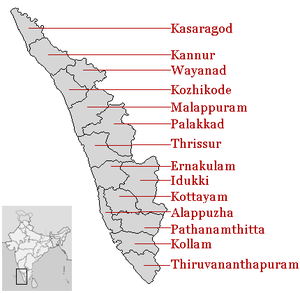

The Land of Coconuts borders with the states of Karnataka on the North, Tamil Nadu on the South and East and the Lakshadweep Sea coastline on the west. Except near Palakkad Western Ghats form almost continuous chain of mountains. The Indian state Kerala was formed on 1 November 1956 according to the State's Reorganisation Act.
The State is divided into fourteen revenue districts and they are:

  • Kasargod
  • Kannur
  • Wayanad
  • Kozhikode
  • Malappuram
  • Palakkad
  • Thrissur
  • Ernakulam
  • Idukki
  • Kottayam
  • Alappuzha
  • Pathanamthitta
  • Kollam
  • Thiruvananthapuram
And on the basis of geography, they are generally classified into three parts

  • The North Kerala Districts
  • The Central Kerala Districts
  • The South Kerala Districts
Most of the districts in the State are often named after the largest town or city in the district itself and even some of them were renamed from the English names to the local names in the year 1990. Also, the 14 Districts are further divided into Taluks and Gram Panchayats and according to the records, there are 75 Taluks and 941 Gram Panchayats. Each District of the State is governed by respective District Collectors who is an Indian Administrative Service (IAS) officer and is appointed by the Government of Kerala.


KASARGOD, KANNUR, WAYANAD


KASARGOD

Location in Kerala, India

The Kasargod is one of the and topmost Northern district of Kerala. With four taluks Manjeshwaram (Uppala), Kasargod, Vellarikund, Hosdurg it was declared as a district in 1984 on 24 May and it borders Kannur district to the south, southeast and Karnataka's districts of Kodagu and Dakshina Kannada to the north, Western Ghats to the east and the Laccadive Sea to the west. The District headquarters of the district is in the Kasargod town.
Kasargod is gifted with the blessing of the rich biodiversity of Western Ghats. The district is well-known for the tourist spots Bekal and Chandragiri Forts, Chandragiri River, the historic Kollathiri Rajas, the scenic beauty of the Ranipuram and Kottecheri Hills, Religious and HIstoric sites like Madiyan Kulam temple, Madhur temple, Ananthapuram Lake Temple and Malik Dinar Mosque.
From the capital Thiruvananthapuram, the district is located 585 km North and 50km south of the port city Mangalore.

KANNUR
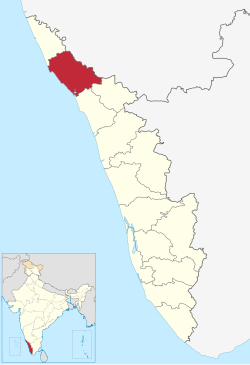
Location in Kerala

The Kannur district with five thaluks Thalassery, Iritty, Kannur, Thaliparamba and Payyanur is bordered by the Kasargod district to the North, Kozhikode district to the south, Mahe to the southwest, Wayanad to the southeast, Western Ghats to the East and the Arabian Sea to the west. The English name Cannanore was the old name of Kannur. The District headquarters of the district is in the Kannur town. Kannur was a part of Malabar district during the British rule. This district which was formed in 1957 is the sixth most urbanized district in Kerala. The coastal city of Kannur was once an ancient trading port. The 16th-century monument St. Angelo Fort, the Arakkal Museum of Muslim Royal Family, the Payyambalam beach etc are some of the breathtaking views of the district.


WAYANAD
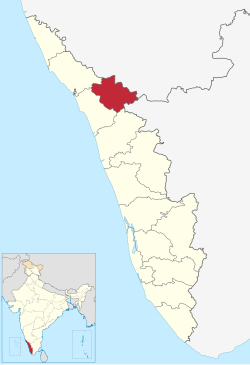
Location within Kerala

With administrative headquarters in the at the municipality of Kalpetta Wayanad is set high on the Western Ghats with altitudes ranging from 700 to 2100 metres. On 1 November 1980, the district was formed as the 12th district in Kerala by carving out areas of the Kozhikode and Kannur districts. Most of the district is under forest and therefore it gives refreshing experience to the tourists. Mananthavady, Kalpetta and Sultan Bathery are the three municipal towns of the district and many tribal colonies or communities are a part of this beautiful district. The Lava Kusha Temple in Pulpally, Mirror Jain Temple in Vythiri, Ambukuthi Hills, Edakkal Caves, Banasura Dam, the evergreen forest etc are some of the tourist spots of the district.


Friday, September 20, 2019

STATE FLOWER AND TREE

LET'S KNOW MORE ABOUT THE STATE FLOWER AND TREE OF THE LAND OF COCONUTS.

FLOWER - CASSIA FISTULA


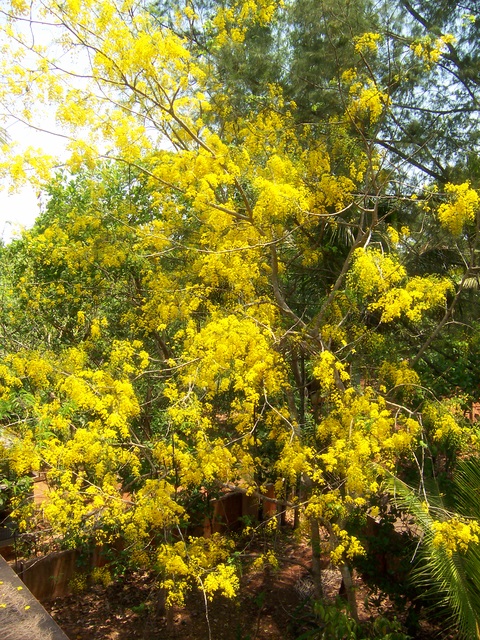
The flowering plant Cassia fistula is commonly known as Golden Shower, Purging Cassia or Indian Laburnum. It is a native of the Indian subcontinent and adjacent regions of Southeast Asia and it ranges from eastward throughout India to Myanmar and Thailand and south to Sri Lanka and southern Pakistan.

Konnamaram.JPG

The Golden Shower tree is locally known by the popular name Kanikonna is the member of subfamily Caesalpiniaceae of the legume family Fabaceae. This popular ornamental plant is also used in herbal medicines. It is not only the state flower of Kerala but also both the National Tree and National Flower of the country Thailand. With deciduous leaves and pinnate with three to eight pairs of leaflets, growing to 10-20 m (33-66 ft) tall with fast growth the Golden Shower Tree is a medium-sized tree. The each flower of the tree are with five yellow petals of equal size and shape which are produced in pendulous racemes 20-40 cm.


The 30 to 60 cm long and 1.5 to 2.5 cm broad fruit is a legume with a pungent odour and it contains several seeds. The strong and very durable heartwood of the tree has been used to construct 'Ehela Kanuwa', a site at Adams Peak which is situated in Sri Lanka. The ornamental plant grown in tropical and subtropical areas blooms in the late spring with trees being covered with yellow flowers and sometimes it makes the leaves of the trees to hide under the yellow colour. These trees grow well in dry climate or in full sun, especially in hot summers and hence it is salt-tolerant and drought-tolerant and also tolerate the light brief frost. But if the cold persists it can get damaged very easily. There are so many species of butterflies and bees which are known to be pollinators of Cassia fistula flowers especially carpenter bees. Also in some parts of India, the people used to eat the flowers of the Golden Shower Tree and also the leaves of the tree are used to supplement the diets of cattle, sheep and goats fed with low-quality forages. It is also known as Aragvadha ( disease killer) in Ayurvedic medicine.
The state flower have very much importance in the State especially ritual importance in the Vishu festival.

STATE TREE - COCONUT TREE

Coconut trees

Cocos nucifera is the only known living species of the genus Cocos and it is a member of the Palm tree family. The whole coconut palm, the seed, or the fruit can be referred by the term 'coconut'.After the three indentations on the coconut shell that resemble facial features, the term coconut derived from the Portuguese and Spanish word coco which means head or skull. Coconuts have various uses and it is very much important in the Kerala State. Hence it is the State Tree of the beautiful state Kerala. The state's name itself derived from the relation between the land and coconut trees. The two Malayalam words Kera and Alam are joined together to get the name Kerala or Keralam which means Coconut and Land respectively. Thus the southwestern Indian state is also known as 'The Land of Coconuts or Coconut Trees'. There is no Kerala without coconut trees and the production of coconuts plays a major role in the economy and culture of the holy land.
Cocos nucifera - Köhler–s Medizinal-Pflanzen-187.jpg
All parts of the 'Kalpa Vriksham' or 'Coconut Tree' is useful in some or other way. Cocos nucifera is unavoidable part of Kerala in many ways like coconut oil, coconut toddy, coconut milk, coconut water, coconut is used in many Kerala dishes, and the tree leaves are used to make baskets, doormats, sheds, husk for making coir, the shells for making ladles etc.
Coconut tree is also a part of culture and tradition of Kerala.


THAMARASSERY CHURAM

ABOUT MY FAVORITE PLACE THROUGH THE MAGICAL LETTERS OF MALAYALAM. ഞാൻ അറിഞ്ഞ താമരശ്ശേരി ചുരം കർണാടകയിലായിരുന്നപ്പോൾ മുതൽ എന്റ...