Showing posts with label welcome to kerala. Show all posts

Tuesday, September 24, 2019

DISTRICTS OF KERALA

LET'S TRAVEL THROUGH THE DISTRICTS OF THE COASTAL STATE.
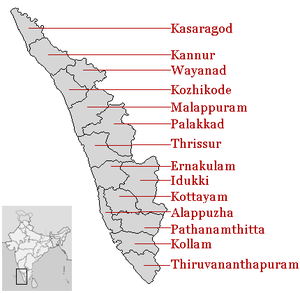

The Land of Coconuts borders with the states of Karnataka on the North, Tamil Nadu on the South and East and the Lakshadweep Sea coastline on the west. Except near Palakkad Western Ghats form almost continuous chain of mountains. The Indian state Kerala was formed on 1 November 1956 according to the State's Reorganisation Act.
The State is divided into fourteen revenue districts and they are:

  • Kasargod
  • Kannur
  • Wayanad
  • Kozhikode
  • Malappuram
  • Palakkad
  • Thrissur
  • Ernakulam
  • Idukki
  • Kottayam
  • Alappuzha
  • Pathanamthitta
  • Kollam
  • Thiruvananthapuram
And on the basis of geography, they are generally classified into three parts

  • The North Kerala Districts
  • The Central Kerala Districts
  • The South Kerala Districts
Most of the districts in the State are often named after the largest town or city in the district itself and even some of them were renamed from the English names to the local names in the year 1990. Also, the 14 Districts are further divided into Taluks and Gram Panchayats and according to the records, there are 75 Taluks and 941 Gram Panchayats. Each District of the State is governed by respective District Collectors who is an Indian Administrative Service (IAS) officer and is appointed by the Government of Kerala.


KASARGOD, KANNUR, WAYANAD


KASARGOD

Location in Kerala, India

The Kasargod is one of the and topmost Northern district of Kerala. With four taluks Manjeshwaram (Uppala), Kasargod, Vellarikund, Hosdurg it was declared as a district in 1984 on 24 May and it borders Kannur district to the south, southeast and Karnataka's districts of Kodagu and Dakshina Kannada to the north, Western Ghats to the east and the Laccadive Sea to the west. The District headquarters of the district is in the Kasargod town.
Kasargod is gifted with the blessing of the rich biodiversity of Western Ghats. The district is well-known for the tourist spots Bekal and Chandragiri Forts, Chandragiri River, the historic Kollathiri Rajas, the scenic beauty of the Ranipuram and Kottecheri Hills, Religious and HIstoric sites like Madiyan Kulam temple, Madhur temple, Ananthapuram Lake Temple and Malik Dinar Mosque.
From the capital Thiruvananthapuram, the district is located 585 km North and 50km south of the port city Mangalore.

KANNUR
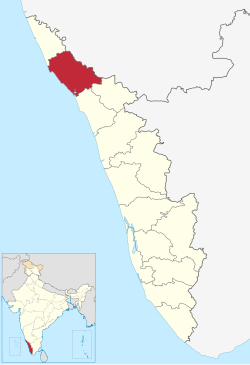
Location in Kerala

The Kannur district with five thaluks Thalassery, Iritty, Kannur, Thaliparamba and Payyanur is bordered by the Kasargod district to the North, Kozhikode district to the south, Mahe to the southwest, Wayanad to the southeast, Western Ghats to the East and the Arabian Sea to the west. The English name Cannanore was the old name of Kannur. The District headquarters of the district is in the Kannur town. Kannur was a part of Malabar district during the British rule. This district which was formed in 1957 is the sixth most urbanized district in Kerala. The coastal city of Kannur was once an ancient trading port. The 16th-century monument St. Angelo Fort, the Arakkal Museum of Muslim Royal Family, the Payyambalam beach etc are some of the breathtaking views of the district.


WAYANAD
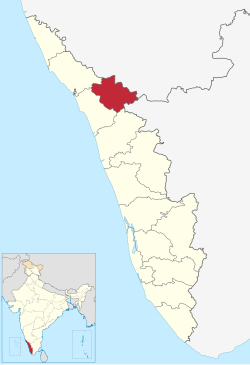
Location within Kerala

With administrative headquarters in the at the municipality of Kalpetta Wayanad is set high on the Western Ghats with altitudes ranging from 700 to 2100 metres. On 1 November 1980, the district was formed as the 12th district in Kerala by carving out areas of the Kozhikode and Kannur districts. Most of the district is under forest and therefore it gives refreshing experience to the tourists. Mananthavady, Kalpetta and Sultan Bathery are the three municipal towns of the district and many tribal colonies or communities are a part of this beautiful district. The Lava Kusha Temple in Pulpally, Mirror Jain Temple in Vythiri, Ambukuthi Hills, Edakkal Caves, Banasura Dam, the evergreen forest etc are some of the tourist spots of the district.


Saturday, September 21, 2019

KERALA'S OWN JACKFRUIT

LET'S DIG INTO THE HIDDEN SECRETS BEHIND KERALA'S OWN SWEET FRUIT 'JACKFRUIT'.

STATE FRUIT - JACKFRUIT

Jackfruit, Tree, African, Green


Jackfruit hanging.JPG


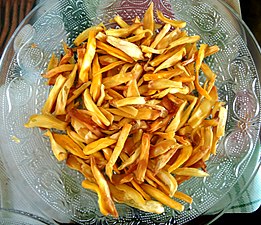
The Jack tree or Jackfruit is a species of tree in the family Moraceae which includes trees like fig, breadfruit and mulberry. It is believed that the centre of origin of the Jackfruit tree is in the region between the Western Ghats of southern India to the rainforests of Borneo. The Jack tree bears the largest fruit of all trees weighing 55 kg (120 lb), 90 cm (35 in) length, 50 cm (20 in) in diameter and it is well suited to the tropical low lands.
 About 100 to 200 fruits can be produced by a mature Jack tree in a year and it is a multiple fruit which composed of hundreds to thousands of individual flowers and also the fleshy unripe fruit is used to eat by many groups of people. The young jackfruit or the immature unripe fruit has a mild taste and the meat-like texture lends itself to being a meat substitute for vegetarians and vegans. Desserts are more often made by the ripe fruit which is much sweeter and also considering the variety.
Jack Fruit, Food, Fruit, Nature, Fresh
Artocarpus heterophyllus is commonly used in the cuisines of South and Southeast Asia and also many people consume both the ripe seeds and the unripe fruit in many ways. Throughout the tropical regions of the world, the Jack tree is widely cultivated. It is not only the state fruit of Indian states Kerala and Tamilnadu but also the national fruit of Bangladesh and Sri Lanka. Like noodles and chips, the fruit is available in many foreign markets in the form of various products and also it is available frozen or canned as a sweet fruit syrup or as a vegetable.
In 1498, when the Portuguese arrived in India at Kozhikode on the Malabar coast the name too introduced by them. From the Portuguese word Jaca the Malayalam word Chakka or Chakka Pazham for the Jackfruit. As evidenced by the fact that the Southeast Asian names are for the fruit are derived from the Sanskrit roots, the Jackfruit or Jack tree was domesticated independently in South Asia and Southeast Asia.

The evergreen tree easily reaches heights of 10 to 20 metres with trunk diameters 30 to 80 centimetres and it also has a relatively short trunk with a dense treetop. In the event of injury to the reddish-brown and smooth bark, a milky juice is released.
There are both male and female flowers on a tree and therefore Jackfruit trees are monoecious.
With subtle flavour, ripe Jackfruits are naturally sweet and it is used to make a variety of dishes including cakes, custards, etc.

The aroma of the fruit distinctive sweet and fruity and it is known to emit a strong aroma when it is fully ripe and unopened and also the inside gives a smell of pineapple and banana. The seeds are often used as a commercial alternative to chocolate aroma after roasting.
In Kerala and other southern states, jackfruit trees can be seen almost everywhere and different varieties are widely produced every year.  Also, it is an unavoidable part of southern cuisine. For breakfast jackfruit dosas, idlis, curry are also made from the fruit and the seeds are also used. Lot of traditions are around this tree. The almost every part of the tree is used in one or other people like leaves are used as spoons in olden days, also leaves are the favourite food item of the goats, etc. The fruit and even the seeds has a lot of nutritional values. Also, the tree itself provides oxygen and other basic needs to us.
Jackfruit, Fruit, Food
Jack fruits are very organic ones and they are grown in a natural way without any special care in Kerala.


Monday, September 16, 2019

PLANNING A VACAY? THEN EXPLORE GOD'S FAVOURITE PLACE!

Hello EXPLORER! Looking for something exciting? Then enjoy the blog.


'KERALA' = 'GOD'S OWN COUNTRY' = 'SPICE GARDEN OF INDIA' = 'LAND OF 
COCONUTS'
These popular names are worth enough to describe the uniqueness of Kerala. Let's travel through the southwestern Malabar Coast of India.

Alappuzha

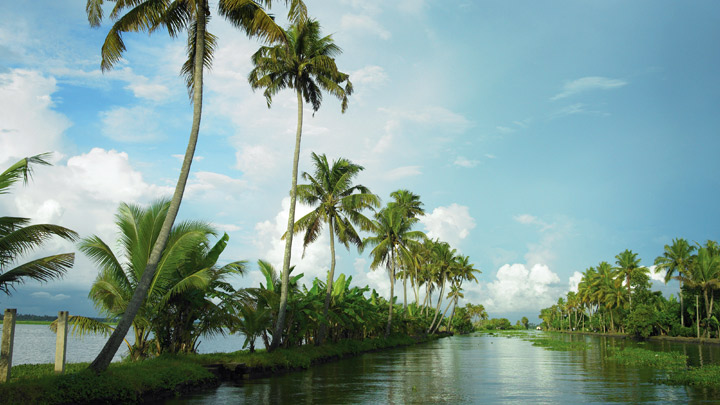
The beautiful state got its name from two Malayalam words 'Kera' and 'Alam' which means 'Coconut' and 'Land' respectively. Thus the southwestern Indian state is also known as 'The Land of Coconuts or Coconut Trees'. There is no Kerala without coconut trees and the production of coconuts plays a major role in the economy and culture of the holy land.
All parts of the 'Kalpa Vriksham' or 'Coconut Tree' is useful in some or other way. Cocos nucifera is unavoidable part of Kerala in many ways like coconut oil, coconut toddy, coconut milk, coconut water, coconut is used in many Kerala dishes, and the tree leaves are used to make baskets, doormats, sheds, husk for making coir, the shells for making ladles etc.
   

There are many reasons behind the admired name 'GOD'S OWN COUNTRY' of the coastal land. One of them is according to the Hindu Mythology. It is believed that Lord Vishnu took the avatar of axe-wielding warrior sage Parasurama (Rama with an axe) in the era of King Kaartavirya. The King's injustice activities led to war between them and Parasurama killed the King. At the end, he threw the axe across the sea and thus creating the land of Kerala. Hence the land is known as Parasurama Kshetram( The Land of Parasurama) or The God's own Country.

Kerala is rich in culture, values and also gifted with green beauty. Land with best flora, fauna and diverse landscapes. Not only the richness of the place but also the scrumptious food make the land heaven on earth.
Image result for kerala gods own country hd images
Soil is rich in minerals and thus Kerala is highly fertile. This also adds to the Godly presence of the coastal state. 
The Spice Garden of India
Cinnamomum_verum_spices.jpg
The state delivers a variety of spices to the Nation. Black pepper, ginger, cardamom, cinnamon, garlic, Vanilla, cloves, turmeric, tamarind, nutmeg, etc are the most commonly produced spices in the heaven of scenic beauty.
BlackPepper_2601
During the ancient period, The Garden of Spices attracted and established trade relations with the Phoenicians. They made tours to carry the spices from the Malabar Coast to Mediterranean lands. The west used it to flavour their all food, wine, and to preserve meat during the cold European winter. Also, the spices have medicinal value. These all reasons paved the way for Europeans to explore new trade routes to the Kingdom of Spices.
The beauty of Spice plantations of Kerala cannot be portrayed in a single canvas, it is such a mesmerizing feeling of pure love. It is a refreshingly different eco-tourism option to witness the magical experience ever. Also, it reminds us of the amazing fact that without spices delicious foods cannot be ever cooked.
Image result for spice plantation kerala hd images

More Facts about the Garden of Spices
Kerala was formed on 1st November in the year 1956 by combining the Malayalam speaking regions together. So Malayalam is the official language and most widely spoken language of the state. It is spread over 38,863 square kilometres ranking 23rd by area in India and divided into 14 districts with the capital being Thiruvananthapuram. 
The 14 Districts are
Kasaragod
Kannur
Wayanad
Kozhikode
Malappuram 
Palakkad
Thrissur
Ernakulam
Idukki
Kottayam
Alappuzha
Pathanamthitta
Kollam
Thiruvananthapuram

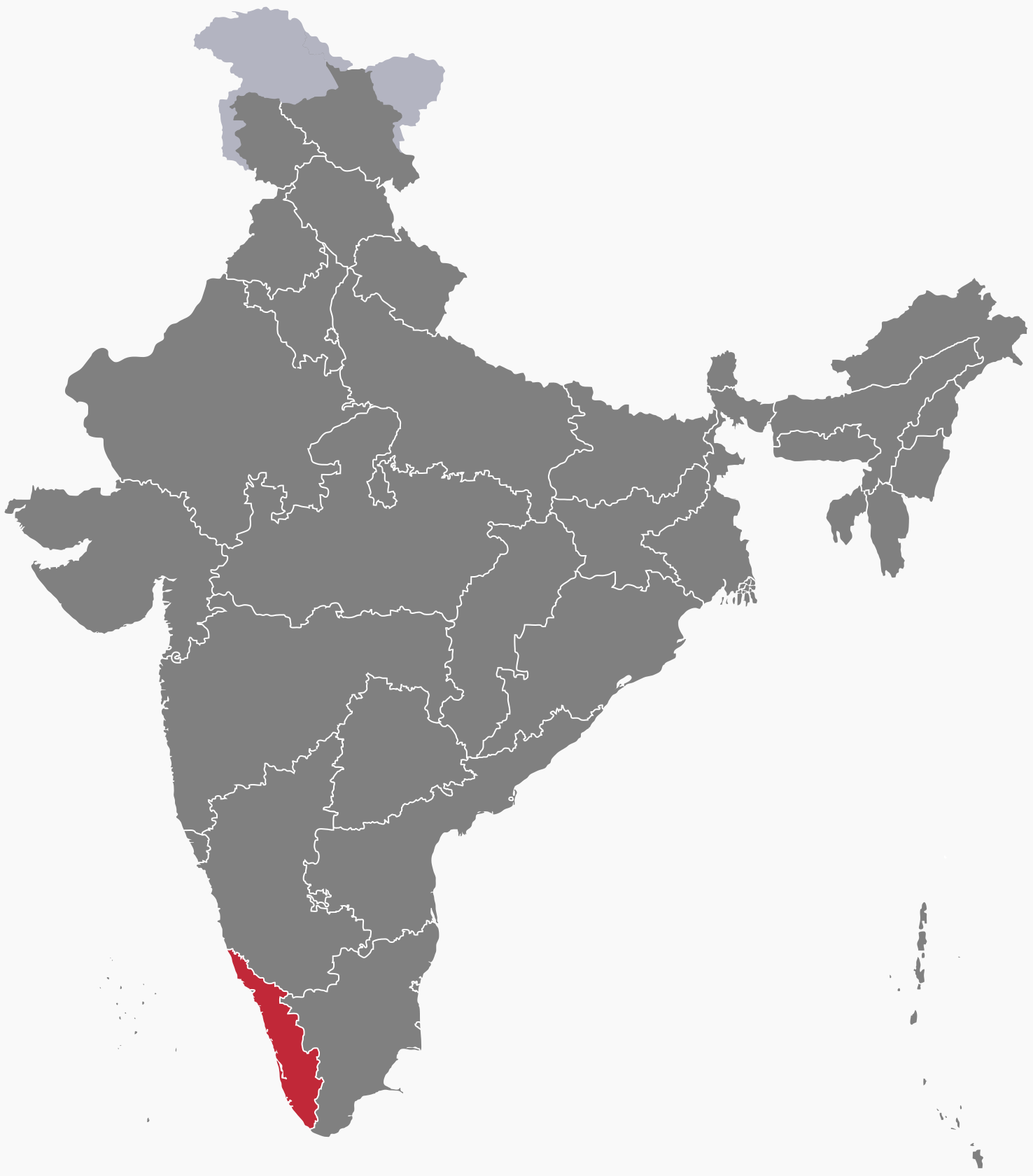
KERALA IN INDIA

 Image result for kerala map in india hd         

KERALA


Kerala is a paradise on the world and everyone must see this destination once in a lifetime. The culture, traditions, beauty of the land have made Kerala one of the most tourist destinations in India and overall world itself. Ecotourism initiatives like Mountaineering, trekking, and bird-watching programmes in the Western Ghats are also attracting the tourists in a wide range. Tourism industry is the major contributor to the state's economy.

THAMARASSERY CHURAM

ABOUT MY FAVORITE PLACE THROUGH THE MAGICAL LETTERS OF MALAYALAM. ഞാൻ അറിഞ്ഞ താമരശ്ശേരി ചുരം കർണാടകയിലായിരുന്നപ്പോൾ മുതൽ എന്റ...